Sunday, December 7, 2014

Culture REALLY DOES Eat Strategy For Breakfast


“Whatever you have learned or received or heard from me, or seen in me--put it into practice. And the God of peace will be with you.” (Philippians 4:9)

Today marks the end of the fourth week of my sabbatical.  Our family is in the midst of a transition from one call to the next.  We will be moving all the way across the country, from Yakima, Washington in the Pacific Northwest to Orlando, Florida in the Southeast.  In terms of the contiguous United States, only Seattle to Miami would be a greater distance!  The last four weeks have given me an opportunity to disengage, rest, and reflect upon the past seven years.  I have always believed that there are lessons to be learned through each experience and season.  God facilitates growth when we open ourselves up to what He wants to show and teach us. 

As I am in transition, I no longer have a church newsletter as a writing outlet. Thus, I wanted to use this blog over the next several weeks to offer some of the lessons I have learned- as an exercise in closure.   The first one is an affirmation of the quote attributed to Peter Drucker:  Culture really does eat strategy for breakfast!

Five and a half years ago, we were experiencing quite a bit of conflict.  The conflict was unhealthy as it was personalized and pervasive.  Triangulation and gossip had eroded trust.  Lack of transparency and communication had created a divide between the leadership of the church and the congregation.  Consequently, we were stuck and sinking fast.  We could not get any traction in our efforts to move the congregation forward and could not reverse a nearly twenty-year trend of declining membership and participation.  In fact, everything we tried only intensified the conflict. Something kept getting in the way and, we could not figure out exactly what it was.

At the recommendation of a colleague, we hired TAG Consulting to come in and help us.  Part of that help entailed a health assessment of the church that revealed quite a bit of dysfunction at the leadership level.  We were told that our system was perfectly designed to produce the results we were getting.  "System" is defined as the combination of structures, processes, and people.  The “system” is intimately connected to the issue of culture.  Additionally, we were also told that a congregation or organization is always a reflection of its leadership.  Unhealthy leadership = unhealthy congregation.

My coach through TAG, Tod Bolsinger (http://bolsinger.blogs.com), spent a great deal of time with me, talking through the topic of culture. Tod once wrote that the “culture of a group is like its ‘DNA,’ it’s part of what makes it what it is. A ‘culture’ is the result of the intentional and mostly unintentional ‘habits’ of a people. The assumptions, ‘givens,’ the unreflected-upon actions and attitudes that make up ‘who we are’ that most of the time we don’t even think about.”[i]  In one of our coaching sessions, Tod hit me with this:  “The primary responsibility of the leader of any organization is to set the culture.”  He went on to tell me (as he spelled out in the blog post) that you can have a compelling vision or a well thought-out strategy, but vision and strategy can always be thwarted by the intentional and unintentional habits of the people.

We set out to address our issues and create a healthier culture- one that put people first.  We committed to the core value of engaging and nurturing relationships.  We committed to hold each other accountable to that value.  We committed to eliminate triangulation and gossip from our practices.  For the most part, I believe we succeeded. On occasion, when we reverted back to old bad habits, our efforts at meeting our vision were quickly derailed.  In fact, it was amazing and even eye-opening to me how quickly that happened.  This past year, we finally saw an increase in both membership and worship attendance.  With our elders and staff leading the way, a common sentiment expressed to me repeatedly this year from the membership has been, "The church feels different."  It was a long, hard road, but our healthier system produced healthier results.  There's no question that God's hands were all over us, and all glory goes to Him, but the results had everything to do with the culture we fostered- a culture in which we honored God and honored each other.

Five and a half years later, I am convinced that the single biggest lesson to be learned in leadership is the importance of setting the culture.  Companies like Apple, Google, Starbucks, and Disney are very clear about, and never do anything that would be a violation against, their core values (a component of culture), and it shows.  Vision and strategy are incredibly important- there’s no question about that.  The issue of culture, however, is of utmost importance. Like a plant in fertile soil, strategy and efforts to fulfill vision will thrive in a healthy culture.  It's what separates the great organizations from the good ones.  Whether it’s the senior leader or the senior leadership team, an organization’s success will depend on what kind of culture is being cultivated by those leaders.

Epiphany: If it is true that culture eats strategy for breakfast, the church leader's job is to make sure transparency, accountability, communication, and any and all Christ-like values are on the menu.

Saturday, September 28, 2013

Come, Follow Me...


“Come, follow me…and I will send you out to fish for people.” (Matthew 4:19)

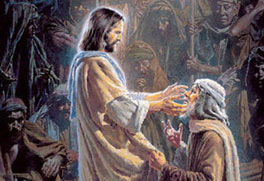
With this invitation, Jesus extends His hand to you.  His desire is that you take it. 

As you take it, He wants you to talk with Him. He wants to hear your joys.  What’s going good?  What are you proud of?  He wants you to celebrate and laugh with you.  He also wants to hear your concerns and frustrations.  What are you mourning?  What are your disappointments?  Nothing is too big or small.  Don’t hold anything back.  He’s got all the time in the world.  He wants you to feel his presence and know He is with you every waking and sleeping moment of every single day.  Even when you are totally and utterly convinced that you are alone and helpless, the hand is forever extended…waiting.  Come, follow me.

As you take it, He wants you to walk with Him.  He wants you to follow in His footsteps and be a disciple “in motion.”  He wants you to live out your faith and to give evidence of that faith through the fruit of the Spirit: love, joy, peace, forbearance, kindness, goodness, faithfulness, gentleness and self-control.  He wants you to demonstrate the love you have for Him through the love you offer to others.  He wants you to offer kind words to each person you meet.  It doesn’t matter who it is and what their background is.  More importantly, He wants you to be His incarnational (the hands and feet of Jesus) presence in their life.  Even when you have been emotionally wounded or verbally attacked and the last think you want to do is “turn your check,” the hand is forever extended…waiting.  Come, follow me.

Once you take His hand (and you begin talking and walking with Him), He sends you out into your life to interact with people.  Every person you encounter, whether family, friend, or complete stranger is a potential “fish” in need of being “caught.”  Please do not misunderstand.  It’s not your task to convince or win other people over.  Jesus is not a product to be “sold” or “peddled.”  Your task is to cast the line and you do this by talking and walking with Him.  Your life, what you say and do, is a powerful witness that invites “nibbling.”  It’s Jesus who does the actual catching.  Even when you feel completely inadequate and under-qualified, the hand is forever extended…waiting.  Come, follow me…and I will send you out to fish for people.

God is calling you into a deeper relationship.  He desires your trust and obedience because He wants you to experience His love and peace.  Once you do, your life will be forever changed. 

The questions remains for you to answer:  Will you take Jesus’ hand and go fishing?

Wednesday, August 7, 2013

A Compass That Points To Whatever You Want?


I read the Facebook post with great interest.  It was from a friend from my past who is a member of another Presbyterian Church.  His post included a picture that stated, "This Christian supports..."  I won't share the issue, as that's not what this post is about.  However, I was concerned as I read his reasoning.  He stated that, "After much soul-searching..." and "In deference to those I love...I have decided..."

This is a person for whom I have had a great deal of respect (and still do!), so I was curious as to how he had changed his mind.  So I asked how he had come to his conclusion.  I asked (I am paraphrasing) if he had some new insights into Scripture.  His response, truth be told, had nothing to do with the Bible.  

It prompted me to think about how Christians make decisions.  After chewing on it for a couple of months, I am mostly disappointed with the Church (in the broadest sense).  I am convicted that the Church (and I'm pointing my finger at me as well!) has failed in that we have not passed down the faith handed to us by generations of faithful Christians.  In this instance, we have not impressed upon our church attendees the authority of Scripture and the role the Bible has in shaping how we think, talk, and act.  The irony is I am part of a tradition (Reformed) that has always held a very high view of Scripture.  We believe that scripture IS the Word of God.  We have affirmed what Scripture says about itself:

"All Scripture is God-breathed and is useful for teaching, rebuking, correcting and training in righteousness so the servant of God may be thoroughly equipped for every good work." (2 Timothy 3:16-17, NIV)

When it comes to decisions, I fear fewer and fewer Christians turn to God's Word for guidance.  Whereas we once stood under the text, striving to adhere to the will and way of God as revealed in His Word, we now stand over the text, dissecting and picking and choosing what we want.  Whereas Christians once looked at culture through the lens of Scripture, it is now the case that we look at Scripture through the lens of culture...if we look at Scripture at all.  Thus, culture and self have become authoritative.  Christians, consequently, are becoming more and more biblically illiterate.  Again, here is a failure of the Church.  

I love the Pirates of the Caribbean film franchise.   (I understand they are in pre-production on a 5th movie.  While some are of the opinion that the series has been played out, I say, "Bring it on!"  I can't get enough of Captain Jack Sparrow!)  In the series, Captain Jack has a unique compass.  The compass does not point north, but rather it points to what Jack (or whoever is holding it) wants most in the world.  At one point, it leads Jack to a bottle of rum.  At another, it leads him to buried treasure.  What a great illustration for us.  Each of us has an internal "compass" that points to whatever we want.  This is even true when it comes to issues of faith.  

Back in 2009, I was alarmed (but not surprised) to read that Barna research had revealed four emerging themes in terms of faith in America.  (I say "not surprised" because of all the missional church work done over the past 15-20 years, indicating we are living in a post-Christian society.)  Of particular interest is that many are choosing an "individual and customized" faith experience, as opposed to an adherence to what I would call orthodox Christianity.  Equally alarming is that biblical literacy doesn't seem to be a goal for most people or churches.  People know "sound bytes" of Scripture or (because of incredible advancements in technology that afford you information at your fingertips) they rely entirely on their smart phones if they are interested in looking up a particular passage.  As I have said often to our congregation, however, if the Scripture isn't in your head, it's not going to be in your heart!

Instead, many have adhered to a "what's good for me is good for me and what's good for you is good for you" mentality.  Faith has become relative.  I can't help but think of the situation in Israel during the time of the Judges:

"In those days Israel had no king; everyone did as he saw fit." (Judges 17:6 & 21:25, NIV)

What we want, unfortunately, is not always what's best for us.  I can spend time "soul-searching" or go on an "inner journey" and, with enough time spent, end up justifying just about anything- believe me!  Without God's guidance, my compass is going to eventually point in whatever direction I want.

As followers of Jesus who have declared Him as Lord of our lives, one of our tasks is to align our lives with that of God.  Thus, our desires should match God's!  Our heart should match God's! Our minds should match God's!  And when we make decisions in life, no matter how big or how small, God's Word must have authority over us.  They do not shackle us, but rather they set us free.  They are Words of life!

So how do you make decisions?  Do you turn to God and His Word or do you do "as you see fit"?  Is God your compass or, like Captain Jack, do you follow your own inner compass of desire?

I end with this Scripture for you to ponder:

"Do not conform to the pattern of this world, but be transformed by the renewing of your mind.  Then you will be able to test and approve what God's will is- His good, pleasing and perfect will." (Romans 12:2, NIV)


Monday, July 15, 2013

God Revealed Through Creation


There are few places I enjoy more than Ketchum/Sun Valley, Idaho.  It just so happens to be where our family is spending the week, thanks to the generosity of some wonderful people.  The community and surrounding area is something special.  It's difficult to look out our back door, behold the sight of the Smokey Mountains of Idaho, the Big Wood River, and various hiking trails and bike paths, and not think about the Creator of all that is.  I am in awe.  Perhaps you've experienced the same when you've been in the mountains or at the beach?

On Sunday, we had the opportunity to worship at the Presbyterian Church of the Big Woods.  No less than three Presbyterian Senior Pastors from other churches attended the 9:30 service.  I guess I'm not the only one who loves the area!  During the service, there was a group from Africa who led the worship singing.  They were fantastic!  They sang with incredible passion and, in the rich tradition of African worship, did a little dancing as well.  I think my hips may have swiveled on more than one occasion...unintentionally!

You can imagine my spiritual high.  Worshipping God in the midst of some beautiful country. It doesn't get any better than that, does it?  And then...

The guest preacher for the morning was introduced, and he stood up to address the congregation.  Don Schoendorfer is the founder and president of Free Wheelchair Mission (http://www.freewheelchairmission.org).  Their mission is to "provide the transforming gift of mobility to the physically disabled poor in developing countries, as motivated by Jesus Christ."  I was startled to hear that 80% of people with disabilities live in developing countries.  That number is staggering when you consider most of those people are without aid. During the message, he read a brief passage from the ninth chapter of John.  He then proceeded to show a video of residents in a village in Ghana.  Their mission group had arrived, and word quickly spread that they were giving away free wheelchairs.  To see so many people come, dragging themselves in the dirt or walking with the assistance of a staff was quite a sight.  The hope of mobility compelled them to come forward and they did so with great dignity.


In chapter nine of the Gospel of John, Jesus and his disciples encountered a man disabled by blindness.  The disciples pose to Jesus a question, inquiring as to who is to blame for his disability: "Rabbi, who sinned, this man or his parents, that he was born blind?" (9:2, NIV)

Isn't that the question that most of us ask, when we see a person who is suffering, disabled, poor, ill, etc?  Basically, we want to know who is to blame?  We tend to think of it as punishment for some misdeed.  Truth be told, some people who fall on hard times do so because of the poor choices they make.  There is no question.  For the person who was born disabled, however, their situation is not due to a poor "choice."  We tend to get frustrated with and ascribe blame to God when it happens to someone we love.  Why did you do this to him?

Jesus responds: "Neither this man nor his parents sinned... but this happened so that the works of God might be displayed in him.  As long as it is day, we must do the works of Him who sent me.  Night is coming, when no one can work.  While I am in the world, I am the light of the world." (John 9:3-5)

Jesus is not interested in ascribing blame.  The reality is we live in a broken and fallen world.  He is interested, however, in speaking about the purpose for which He came into the world.  Jesus is led by the Father to offer a sign that He is indeed the light of the world.  Specifically, He healed the blind man and through this miracle, demonstrated His authority and identity: the Savior of the world.


Our sufferings are always opportunities for God's grace to be revealed.  In the midst of the darkness, the light of Jesus can and does shine.  His compassion preceded the miracle, and we are to have the same compassion.  Elsewhere in the Gospel of Matthew, Jesus articulates the expectation He has for His followers to be bearers of His light.

"You are the light of the world... In the same way, let your light shine before others, that they may see your good deeds and glorify your Father in heaven." (Matthew 5:14-15)

Here's the lesson I learned in a nutshell:  Although God is revealed in the majesty of His creation: the mountains, rivers, oceans, etc., He is more clearly revealed through the compassion we extend to those who suffer, as we are the incarnational presence of Jesus to the world.  Both are equally beautiful!

Have a revealing week!

Saturday, July 6, 2013

Leadership Like Saul or David?


On Sunday, I am traveling to Spokane to take part in the inaugural cohort of the Elder Leadership Institute (http://www.whitworth.edu/ELI/), led by Sara and Jim Singleton, Jerry Sittser, and Steve Macchia.  Two ruling elders, our clerk of session, and my wife, Margaret, will be attending with me, along with others from several churches.

As part of our preparation for this one week intensive, our group has read through and discussed the book Unleader: The Surprising Qualities of a Valuable Leader by Jane Overstreet.  The author compares and contrasts the leadership styles of Saul and David from the Old Testament.  Suffice it to say, Saul is lifted up as the not-so-stellar example while David is lifted up as the leader to emulate.  The difference between the two is that Saul's efforts are not in alignment with God, and David, although flawed just like any other human, continually seeks God's guidance and glorification.  Saul pursues his own agenda while David pursues God's, and his leadership flows from his relationship and intimacy with God.

We have had some great discussions about this book, as you might imagine.  Specifically, we engaged in conversations about how we, as leaders in the Church, can better live into the "old" new, biblical model of leadership.  This is a continuation of a journey and exploration about leadership that began with our church's working with TAG Consulting (more on that in a future post!).

Overstreet's book offers some very helpful questions for one to think about one's own leadership style, and to answer the main question posed to the reader, "Does My Leadership Look More Like Saul's or David's?"  Our group agreed that these questions are relevant, not just for those who are in leadership positions within a church, but also for anyone who supervises, oversees, and simply works with others.  The questions are as follows:

  • Do I fear people more than God?
  • Do I use up or build up people under my leadership?
  • Do I put my interests before God's interests?
  • Do I lead with integrity?
  • Do I let people get close enough to really love me?
  • Do I lead from the security of knowing God's love?

These questions have been convicting and encouraging at the same time.  We have been challenged to think about leadership through the lens of the Bible.  We have begun to understand leadership as an extension of the relationship and intimacy we have with God.  We have also talked about incorporating what we have learned/will learn into our elder selection/training at First Presbyterian Church of Yakima.  

I hope that you might find them useful.  They have certainly primed us for helpful conversations.  It should be a great week!


Wednesday, July 3, 2013

Not All Who Wander Are Lost...


Back when I was an Associate Pastor (2004-2005) at the First Presbyterian Church of Nashville, Tennessee, I created this blog and intended it to be an outlet for thinking and writing.  The daily grind of pastoral ministry took up much of my time and energy in those days...and the blog dropped to the bottom of my priority list.  Although I tried once again in 2009 to resurrect the blog, it has taken me some time to find a regular rhythm to everyday life.  Part of that entailed understanding how I am wired.

Two years ago and as part of a consultation with TAG Consulting, I took the Strength Finders survey and discovered that two of my top five "strengths" are INPUT and LEARNER.  Thus, I learned that I am energized by studying, reading, and writing.  In fact, I love to process ideas out loud or on a keyboard.  When I do have the occasion to write, I never quite have the destination in mind.  I am encouraged by the wisdom of Tolkien's Gandalf when he wrote, "Not all...who wander are lost..."  Whether it's hiking, driving, or writing, I love to wander.

So, here we go again...Hopefully, the third time is the charm!

I hope to regularly write on this blog, especially as I now have been ordained for over nine years and am into my sixth year serving as Senior Pastor of the First Presbyterian Church of Yakima, Washington.  I have failed and succeeded.  I have cried and laughed.  At times, I have loved being a pastor, and other times, I am ready to become a park ranger.  All of these experiences have contributed to my maturation. Simply put, I have had much to process...

I would love it if you would "wander" with me!


Tuesday, April 28, 2009

Send in the Clowns


Pastor Jack or Bozo the Clown?

Five years ago, I attended an ordination service for a friend from seminary. The interim senior pastor of the church, The Rev. Dr. William N. Jackson, offered the sermon for the occasion. The sermon was based on Paul’s first letter to the Corinthians: “We are fools for the sake of Christ” (1 Corinthians 4:10a). In that letter, Paul is offering a “fatherly admonition” to the Corinthians, contrasting the life of an apostle with the lives of those of the church in Corinth. They had become too proud of their faith and maybe a bit judgmental of others. Paul attempts to knock them off their pedestal!

Paul’s words are a healthy reminder to all of us. We become content with our faith. We are comfortable with where we are in our walk with God. Often, the Christian thing-to-do is not always the most popular and Paul challenges us to move beyond our comfort zone. For this reason, we are called to be “fools for the sake of Christ.” Dr. Jackson offered his take on this Scripture and suggested that the word fool could also be interpreted as clown. The analogy of the clown is fantastic! While “fool” carries a very negative connotation, the “clown” encompasses a richer understanding. Using “clown” he speaks of what is entailed in being a “fool” for Christ:

1. The clown/fool for Christ’s sake does the unexpected; the extraordinary, the unusual.
2. The clown/fool for Christ’s sake does things for the good of others.
3. The clown/fool for Christ’s sake does what he or she does in loving vulnerability.
4. The clown/fool for Christ’s sake does what he or she does celebrating life

Do these sound like the characteristics of your life? It’s contrary to our natural tendencies, where we seek to serve ourselves and operate out of comfort. God’s Word, however, continually challenges us to move out of our comfort zones and do the unexpected, love our neighbors, humble ourselves, and celebrate the Life that has graciously given to us! God’s Word challenges us to be clowns for Christ’s sake, with everything that entails.

Dr. Jackson ended his sermon with a tale regarding a conference when he was speaking on this very passage from 1 Corinthians 4. Before he offered the closing prayer, a young woman began to play on her guitar the tune of that Broadway song, “Send in the Clowns." Spontaneously, and through God’s Spirit, she sang this:

“All through the world, all throughout life, people seek answers to sin, freedom, and strife. Send in the clowns. We are the clowns. Send in the clowns.”

We are the clowns. Send in the clowns. Amen!

Friday, April 17, 2009

Lead On...

St. Patrick

This week is quite a contrast from the events of Holy Week!  I am not scheduled to preach and, in fact, getting ready to travel to Nashville for The Outreach Foundation board meeting.  Apart from being part of what is, no doubt, going to be enriching conversations, I am also looking forward to seeing some old friends.  Margaret and I lived in Nashville and the first Presbyterian Church of Nashville was my first ordained call.

 It is truly amazing how God leads us through life.  Right out of seminary, we were called to Nashville, then we were called back to Texas, and now we are answering His calling to Washington.  Going back to Nashville this week reminds me that it is not my plans, but God’s plans that we are to follow.

In the spirit of reverence, devotion, and righteousness, I wanted to share something with you. The words are at attributed to an ancient Irish poem written by Dallan Forgaill dating back to the 8th century and translated from ancient Irish to English by Mary E. Byrnel in 1905. Unlike the version that exists in our current Presbyterian hymnal, this version includes all of the original verses. It is my favorite hymn and I hope it points you to the wonderful way of Jesus Christ!


Be Thou my Vision, O Lord of my heart;

Nought be all else to me, save that Thou art

Thou my best thought, by day or by night,

Waking or sleeping, Thy presence my light.


Be Thou my Wisdom, and Thou my true Word;

I ever with Thee and Thou with me, Lord;

Thou my great Father, I Thy true son;

Thou in me dwelling, and I with Thee one.


Be Thou my battle shield, sword for the fight;

Be Thou my dignity, Thou my delight;

Thou my soul's shelter, Thou my high tower:

Raise Thou me heavenward, O Power of my power.


Riches I heed not, nor man's empty praise,

Thou mine Inheritance, now and always:

Thou and Thou only, first in my heart,

High King of Heaven, my Treasure Thou art.


High King of Heaven, my victory won,

May I reach Heaven's joys, O bright Heaven's Sun!

Heart of my own heart, whatever befall,

Still be my Vision, O Ruler of all.

Monday, April 6, 2009

Final Thought... Reflections on Egypt Part 4

One final thought about Egypt and then I’d like to move on to another topic. The city of Luxor is incredible. 25% of the world’s antiquities are found there. This was my first trip there, even though it was my second trip to Egypt (We went to Sinai instead on our last trip!). It doesn’t take much to imagine what the ancient Egyptian civilization looked like. The Temple of Carnac is immense. The Luxor Temple, although not nearly as large, is equally impressive. The Valley of the Kings, located on the west side of the Nile, is incredible. Because of the dry desert climate, much has remained as it was over 3,000-4,000 years ago, at least to a certain extent.

Even though they have stood up well, they are ruins. The civilization is gone, only preserved in museums all over the world. The ancient gods of the pharaohs are no longer worshiped, but studied by historians and archaeologists.

I discovered that there is a reason the pyramids and tombs of ancient Egypt are on the west side of the Nile. It is because that is the side on which the sun sets. The god “Ra” is depicted as the sun, so when it sets, it signifies death. Interesting, right? The ancient Egyptians were very much concerned with the afterlife. In fact, once the pharaoh assumed position, he set the workers to task, building his pyramid or tomb, and all of his treasure to take with him into the afterlife.

Anyway, I couldn’t help but think of our own church building. What do you think people will say about it 1,000, 2,000, or even 4,000 years from now? Will there even be a church building or a world for that matter?

I said last time that the church is not the building, but rather the church is the followers of Jesus. Don’t get me wrong, many wonderful and life transforming events take place in the church, particularly in the sanctuary. But I think the question of whether or not there will be a church building is a moot point.

We don’t worship buildings or idols, no matter how sentimental we may be toward them. We worship a living God who is active and present in our everyday lives and is very concerned that we live, not just for the afterlife, but that we are agents of His kingdom here on earth! That means that we live out our faith in our everyday lives.

As the ancient Egyptians worked to build their own access into the afterlife, we, as believers in Jesus, celebrate that access has been provided for us. Let me leave this topic by offering you the words of truth that come to us in the Gospel John: “For God so loved the world that he gave his only Son, so that everyone who believes in him may not perish but may have eternal life” (3:16).


Thursday, April 2, 2009

Kasr El Dobara Evangelical Church... Reflections on Egypt Part 3


One of the great experiences we have when visiting Egypt is to take time and speak to the folks at the Kasr El Dobara Church, the largest protestant church in all of the Middle East. The people of the church treat us with great kindness and hospitality. There is no telling how many people grace the doors of the church on any given week. One thing is clear, however, and that is the church is steeped in a rich history and service. One way to describe the church would be faithful people are being blessed by a faithful God! I couldn't help but think of these words. If you've read Tent to Tower, you know their origin. These are words from Dr. Mark Koehler at our own church's 75th anniversary back in 1960.

The Delta Presbytery of the Synod of the Nile planted the Kasr El Dobara Church back in 1940. The Rev. Ibrahim Said was elected as the church's first pastor. He was called the "golden mouthed preacher," which referred to his eloquence and his mastery over words. (No one, to date, has called me a "golden mouthed preacher," nor do I expect they ever will!) The church was given a permit by the king of Egypt in 1944, and they built a beautiful building and sanctuary (pictured above). Ask them to talk about the history of the church, however, and they won't tell you about the building or even the sanctuary, but rather, they want to share about the real church, the faithful men and women of the congregation, who seek to follow God and His direction.

The folks at Kasr El Dobara are doing innovative things. They are considered "progressive" when compared to the rest of the denomination, in terms of their ministries. Are they about the latest church ministry programs? No. In their words, they are simply trying to obey God and be faithful to their Lord and Savior, Jesus Christ!

I couldn't help but think of our own church and wonder what the future entails. We are a church rooted in a great history. The sanctuary is magnificent. Everyone in Yakima knows the tower. However, a church (as our brothers and sisters in Egypt remind us) is not the building, it is the people who strive to follow Jesus, not just on Sunday mornings, but each and every day. We are a church committed to deepening our relationship with Jesus, so that we can love God and love our neighbors.

The second picture is one of a stained glass window behind the pulpit at the Kasr El Dobara Church. Clearly, it is an image of Jesus on the cross. What a beautiful reminder of who it is we follow!

During that 75th anniversary celebration of First Presbyterian Church of Yakima, Dr. Koehler went on to say, "This is our challenge for all future events and programs, that we are faithful to the glorious gospel and to the church of our Lord and Savior, Jesus Christ!" My hope and prayer is that, as we look to the future of FPC, we would have the courage and faithfulness to follow Him, wherever He might lead!


Wednesday, March 25, 2009

When a Door is Closed... Reflections on Egypt Part 2


The old expression goes "When a door is closed, God opens a window." This has never been more evident to me that on this trip to Egypt. I think about all of the frustrations I have had in life, particularly ones in ministry. It's so easy to quit and give up. I must confess that I do succumb to this temptation from time to time. But that is not what is expected of us in the Bible.

God wants us to persevere. I can't help but think of these words in the letter to the Hebrews: "There fore, since we are surrounded by so great a cloud of witnesses, let us also lay aside every weight and the sin that clings so closely, and let us run with perseverance the race that is set before us, looking to Jesus the pioneer and perfecter of our faith, who for the sake of the joy that was set before him endured the cross, disregarding its shame, and has taken his seat at the right hand of the throne of God" (12:1-2, NRSV).

Egyptian Christians know something about perseverance. I see the task they have and it appears insurmountable. They are not worried. Their trust is in the Lord. They know that God is in control. Their faith and attitude was an encouragement to me and to all the members of our team. We heard time and time again, "Where there is an obstacle, there is an opportunity!" What a demonstration of Christian maturity!

What are the obstacles in your life? In what have you put your trust? Is it in the economic system? Is it in the things of this world? Or have you put your trust in the One who loves you so much, He was willing to lay down His life so that you might have abundant, eternal life?

As we are in this season of Lent, I hope you are taking this time to reflect upon the sacrifice of our Savior. We each have different obstacles to our faith lives. The obstacle for each of us, however, is our own sin, or as it is stated in Hebrews, the "sin that clings so close." The opportunity that is given to each of us is to welcome Jesus into our life again. My hope and prayer, as we approach our Easter celebration, is that you might see the window He has opened especially for you and that you might lay aside every weight and run with perseverance to Jesus, the pioneer and perfecter of your faith!

Monday, March 16, 2009

Mutually Encouraged! Reflections on Egypt Part 1


A group of seven from FPC Yakima just returned from a two week experience in Egypt. Inevitably, the question is asked, "Why do we need to travel all the way to a foreign country when there is so much to do right here in our own backyard?"  I have heard the question asked numerous times.  My response has almost become reflex:  To build up the Body of Christ!

In his letter to the Romans, Paul expresses his intention to be with them.  Keeping in mind that Paul has never set foot in Rome, he expresses this desire:

"For I am longing to see you so that I may share with you some spiritual gift to strengthen you- or rather so that we might be mutually encouraged by each other's faith, both yours and mine." (Rom. 1:11-12, NRSV)

Our perception of mission is often one of concrete, cinder blocks, and marl.  That is not to say construction is not a very important part of our mission trips.  It is not the only component of mission work.  Did the Apostle Paul travel around with hammers and blueprints for construction?  No, he sought to build up the church through relational ministry.  He longed to see the believers in Rome because he wanted to share with them a "spiritual gift" for the purpose of strengthening the church, with the hope that they might be "mutually encouraged" by each other's faith.

Our group visited with many believers from Cairo to Upper Egypt.  They expressed deep appreciation for us taking time out of our lives to come and hear their stories and worship and pray with them.  They have many obstacles in front of them, but they treat them as opportunities.  Through these opportunities, they are open to God and put their trust in Him.

Many of the urban Christian communities do not have pastors.  So over the last few years, the Synod of the Nile has provided training for lay pastors.  We met with 37 of the 39 lay pastors who serve these urban communities.  They talked of the challenges they faces in doing ministry. Challenges that, quite frankly, you and I do not have to face.  In a place where they are clearly the minority, it's easy to feel as though you are isolated.  But they persevere and labor in the work of the Lord.  They do not get discouraged.  As one of the lay pastors shared, when a door is closed, God opens a window.  

Our group, along with folks from Tennessee, California, and Pennsylvania, spent much time talking about our experiences on the trip.  The common reaction was that we received so much from this trip.  There is no doubt that we were an encouragement to those we visited, but we were equally, if not more, encouraged by the people with whom we visited.  The Apostle Paul  knew what he was talking about in his letter to the Romans.  

I was encouraged to live more "missionally."  Not everyone is called to go to a foreign country, but we all live in a mission field right here in the Yakima valley.  The Egyptian Christians taught us that living missionally entails what you do, as much as what you say.  A question for us is are we living in such a way that people will have no doubt our love is for God and our neighbor, whoever that might be?

My hope and prayer is that as you talk to the folks who went, you might be encouraged and inspired to live missionally.  That was definitely the case for our team in Egypt.